


DIY Laundry Detergent, Deodorant, & Toothpaste
Updated: Feb 24

Yesterday, we made our own laundry detergent, deodorant, and toothpaste with a simple list of readily available ingredients. Washing soda, baking soda, and salt are easy to find and very affordable.
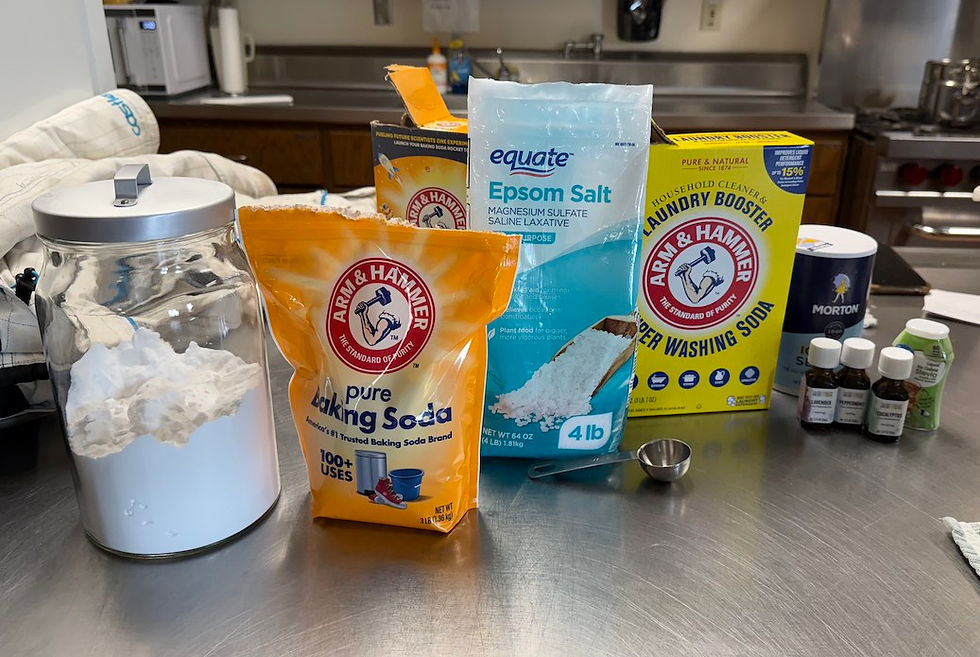
Many other natural ingredients were also used, such as tallow, coconut oil, and bentonite clay. Rebecca, our instructor, also described how to render your own tallow, which can be obtained from your local butcher, or perhaps from someone you know who purchases beef from a local farmer. The rendering process is quite simple with just a crockpot and some water and salt to speed up the process, and can save you a fair amount of money compared to purchasing tallow from the store. You melt the tallow in a crockpot with water (salt optional), which usually takes a couple hours, let it cool and then scrape any impurities off the bottom of your tallow "cookie." You can repeat this process as many times as it takes to get to the purity level you desire.
The cost savings of making any of these products yourself is significant. Here's a summary of these from Rebecca along with some of the benefits of the ingredients:

Other tips Rebecca shared include:
For the laundry detergent, you can use 1 T per load. You can use the little measuring cup that typically comes with powdered detergent.
Borax can be used instead of washing soda
For a top-load washer, add the laundry powder to the bottom of the drum, before adding your clothes, to ensure it dissolves in the wash water
This washing detergent is good for hard water and is gentle enough for kids, but tough enough to clean a farmer's clothes
Regular salt can work in place of the sea salt
Rebecca recommends Fels-Naptha bar soap for spot treating tough stains
For the deodorant, Rebecca recommends suet, which is the hardest, most nutrient-rich fat surrounding the kidneys and loin of the cow. Other tallow will work as well.
Tallow is also a good substitute for shea or mango butter when making other products, such as lotion
The deodorant will be softer in summer when it's warmer. You can fill a regular deodorant stick tube as long as it does not have holes in the bottom.
Just a thin layer of the deodorant should be enough for the day. It works well for both men and women.
There will be an adjustment period when you first start using the deodorant. During the first week, you may find that you sweat and smell more as your body adjusts and as the clay draws out toxins. After then, you will likely find that you will sweat less and smell better.
Rebecca recommends Redmond Bentonite Clay powder because it leaves behind sodium and calcium, which help remineralize teeth. Some bentonite clays leave behind calcium, and some sodium, but this one has both.
You'll need a plastic lid for the toothpaste; otherwise, the wet clay will react with a metal lid
You can try different essential oils for different scents and flavors for the deodorant and toothpaste. If you add oils to the laundry detergent, it will make the detergent smell good but your clothes won't necessarily take on the scent.
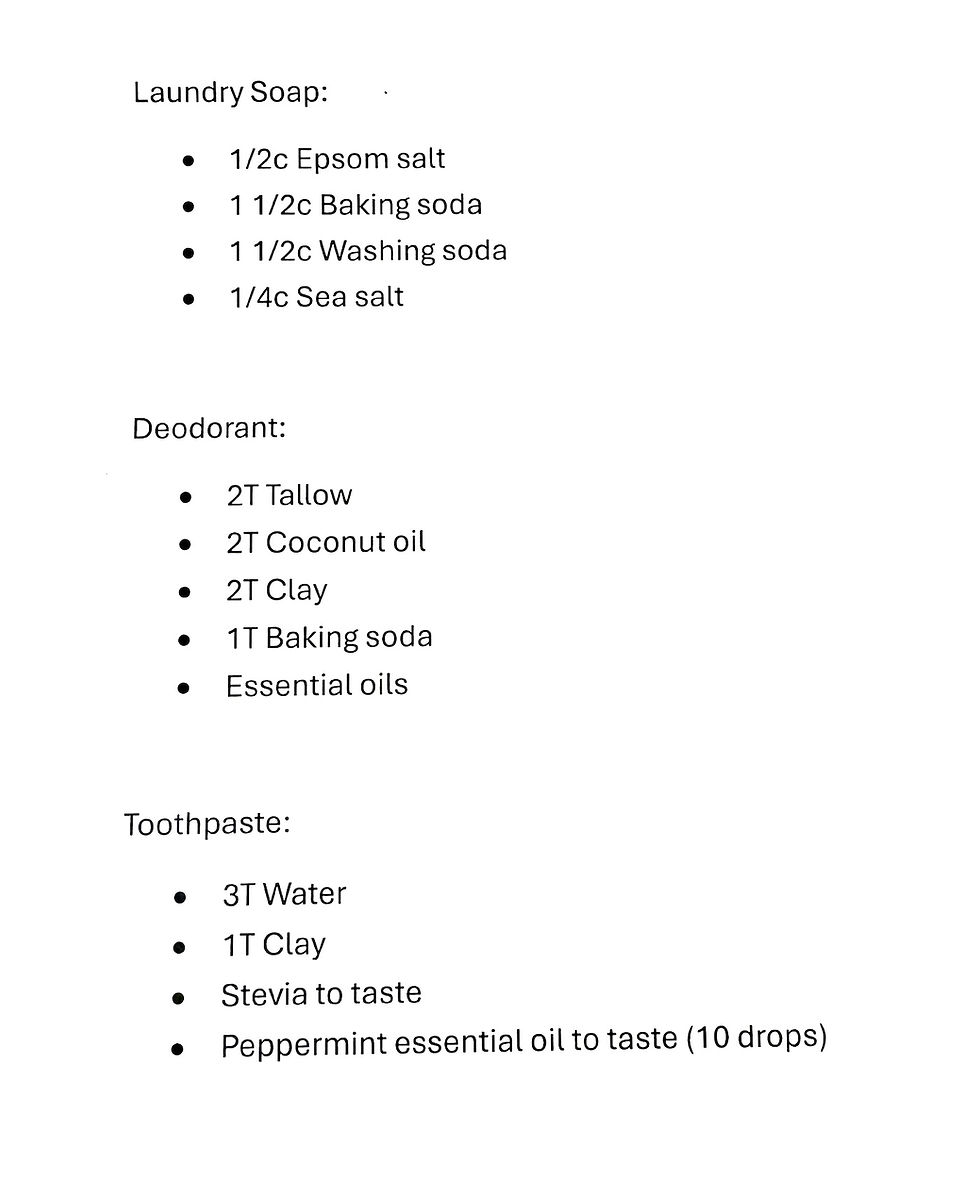
The recipes below make 4 cups of laundry detergent that stores well in a quart-size jar, and 4 oz jars of deodorant and toothpaste
Here are the recipes for the products we made and more pictures below. Thanks again, Rebecca, for teaching this great class!

Comments